
Resources
How I Researched My Family’s Story
According to the UNHCR, the global number of refugees fleeing from war zones and persecution has reached record levels – exceeding the rates seen after World War II. These people may be so traumatized and fearful that they are unable or unwilling to talk about their experiences. As a result, their children and grandchildren may not know the circumstances of their exile or the sacrifices they made for us.
This guide explains how I discovered a generational trauma in my family caused by war. Since my family is Polish, the records I searched are specific for that nationality and so this is an example of an approach that may be helpful to research immigrants from other countries.
The Polish Diaspora after World War II
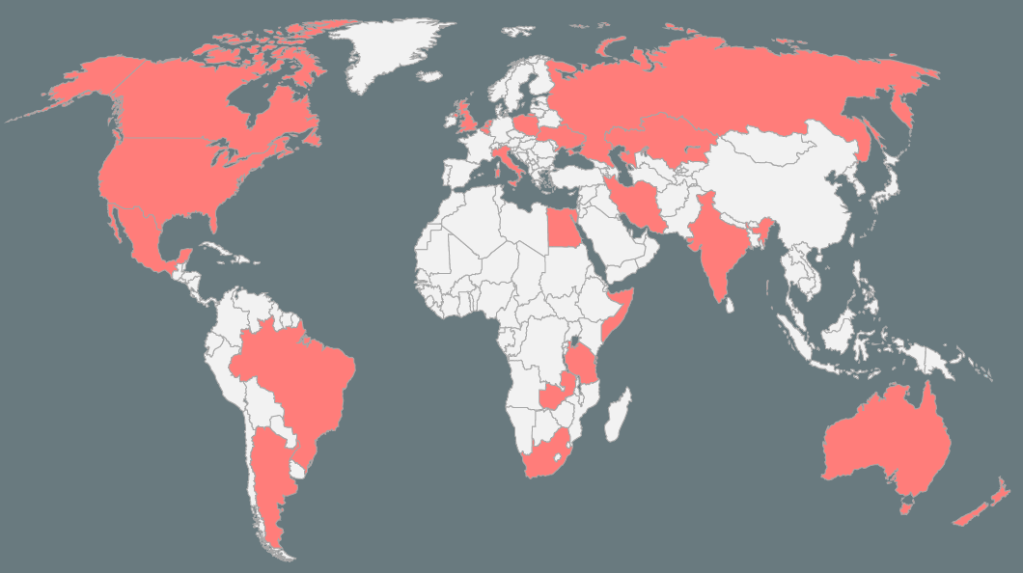
In 1940, around 1.7 million men, women, and children were deported to Soviet gulags across Siberia and Kazakhstan. What became of most of them is not known as life expectancy in the slave labor camps was only 2 years. In 1941, 116,000 of these prisoners managed to reach safety in Persia (Iran). From Persia, some women and children were resettled in the Middle East, Africa, India, Mexico, Australia, and New Zealand. At the end of the war, many Polish combat veterans were unable to safely return to Poland, which was under communist rule. They settled in Britain, America, Canada, Argentina, Brazil, Africa, Belgium, Holland, and Italy. The result is that people of Polish descent are now living all over the globe, and their families in Poland may be estranged.
If you are one of these millions of people Polish descent and trying to find information about your family, there are many excellent resources available online that you can search from your home computer. These websites include lists of veterans who received military decorations and civilians who were deported to Siberia during the Soviet occupation of eastern Poland:
Polish Exiles of WW2 https://www.polishexilesofww2.org
Kresy Family Polish World War II History Group https://www.kresyfamily.com
Kresy Siberia Virtual Museum https://kresy-siberia.org
These sites have corresponding Facebook groups that are also a mine of information and members are happy to share their research.
Most of the documents I encountered are written in Polish and needed translation. Since I don’t speak Polish, I used online translation tools to get a general sense of the document I was looking at. I might then ask a Polish-speaking friend or relative to explain what it said. If the document was important, I asked them if they could give me a written translation or (if it was too long and onerous) highlight the most relevant sections so I could pay for a professional translation.
Civilians Deported to Siberia
If you have a relative who was deported to Siberia, the Polish Red Cross may have a record:
Polish Red Cross (PCK) and Tracing Service
Biuro Informacji i Poszukiwań PCK
ul. Mokotowska 14
00-950 Warszawa
Poland
Tel: (+22) 326-12-64
Email: biuro.poszukiwan@pck.org.pl
https://pck.pl
My uncle, Jan Rupniak, kept a document published by the Nazis in 1941 which records the names of Polish families deported to Siberia by the Soviets. The list includes my grandmother and three uncles who were arrested in April 1940. This list refers to the district of Drohobycz, near Lwów. You can download it here.
Polish Veterans
Your relative may be named in databases cataloguing Poles who received military decorations. I found these websites most helpful:
Polish Order of the Virtuti Militari Recipients 1792-1992
https://feefhs.org/resource/poland-virtuti-index
Polish Exiles of WW2 – under the “archival lists” tab https://www.polishexilesofww2.org
Since the Polish army served under British command during the Allied liberation of Europe, their military records are located in England, in the Ministry of Defense archives. You will need to provide a birth certificate(s) to prove your relationship to the veteran in order to obtain a copy from the MOD, and there is a modest charge for the services. Be prepared that there may be no records of the person you are looking for. Among other details I found in my dad’s records was the name of his High School and the Army Officer’s training school he attended, both of which I was able to visit in person and where local experts provided a great deal of additional information.
Ministry of Defense
APC Disclosures 5 (Polish)
Building 28 B, RAF Northolt
West End Road
Ruislip
Middlesex
HA4 6NG
UK
Tel: +44 208 833 8603 (0208 833 8603 from UK)
Email: NOR-PolishDiscOffice@mod.uk
Additional documents may be available in the archives of the Polish Institute:
The Polish Institute and Sikorski Museum (PISM)
20 Princes Gate
London SW7
UK
Tel: +44 207 589 9249 (0207 589 9249 from UK)
Email: info@pism.org.uk
www.pism.co.uk
The Polish army was comprised of two divisions:
- 1st Armoured Division commanded by General Maczek, which was based in Scotland and participated in the liberation of northern Europe
You can find more information about this division from the websites listed above and from The Black Devils’ March by Evan McGilvray which includes a list of medals awarded to these men.
- 2nd Corps commanded by General Anders (“Anders Army”), which was originally formed in the Soviet Union from prisoners released from the gulag. They were transferred to Persia and fought in the Middle East and Italy
These men were encouraged to write about their experiences in Siberia shortly after their release, and over 36,000 of these records are archived at the Hoover Institution:
Archive of Polish 2nd Corps (Anders Army) – collection 46004
Hoover Institution
Stanford University
Stanford,
California
94305-6010
USA
Tel: (650) 723-3563
request-services@stanford.edu
https://oac.cdlib.org/findaid/ark:/13030/tf0p3000tg/?query=Polish+Anders
There is also a digital version of these records at the Polish National Archive https://www.szukajwarchiwach.gov.pl/
They are difficult to search, but some useful indexes are available through the websites and Facebook groups referenced above.
 nadiarupniak.com